
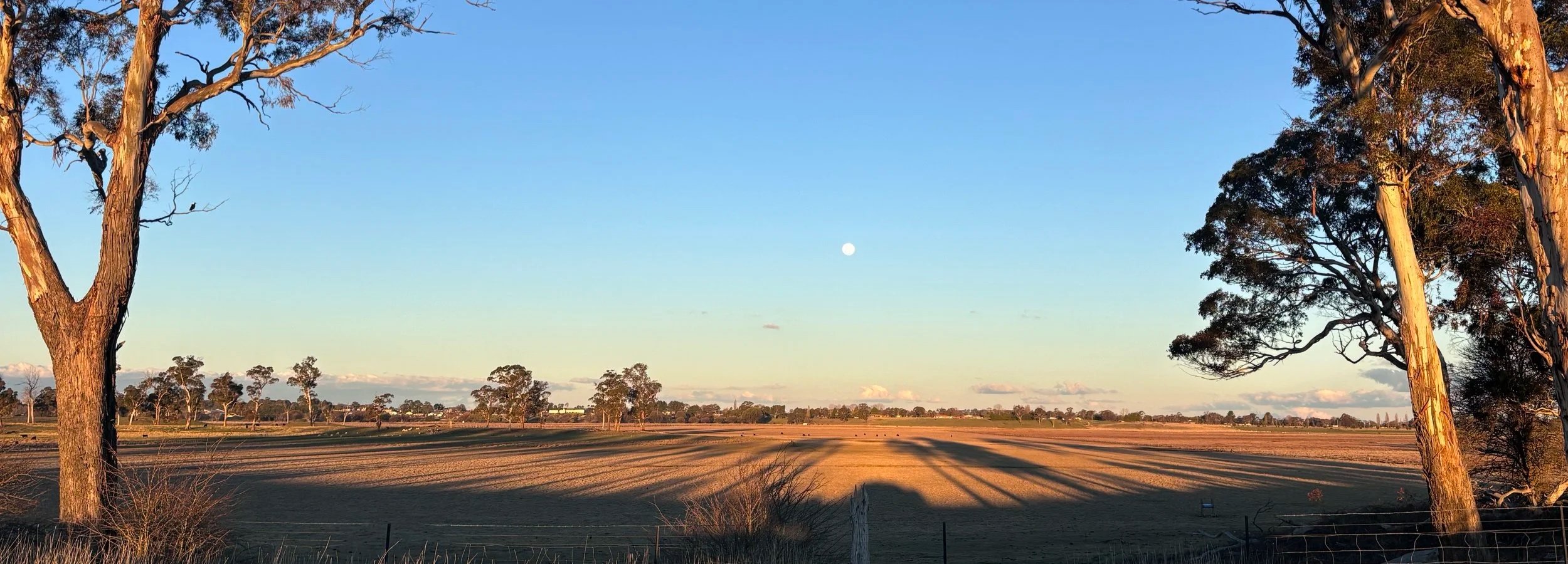
If you live in the northern tablelands of NSW, you’ve probably dealt with breakdowns; cars, farm machinery, they all break down at one point or another. Drive them too hard, and they stop until you find the problem, fix it, and get them back on the road. You probably know how to handle drought, financial pressure and long hours.
But it’s not just our machines that break — sometimes, it’s us too.
The reality is that mental health problems and suicide affect rural and regional Australians at higher rates than people living in major cities. The good news is that support works, and getting help early can make a significant difference.
Here are 5 reasons to worry about the men in and around Guyra:
1. Suicide rates increase the further you live from a major city
The Australian Bureau of Statistics reports that suicide rates are consistently higher in regional, remote and very remote Australia than in major cities. In 2024, men living in remote and very remote Australia had suicide rates more than double those of men living in major cities. That’s a very high risk.
2. Farmers face an even higher risk
A national study of farmer suicides found that Australian farmers experienced suicide rates almost 60% higher than non-farmers, with the gap increasing in more recent years studied. One farmer dies by suicide every 10 days, according to an Australian-first study based on 10 years of national coronial data.
3. Regional areas report even less access to help
Despite being under increasing pressure, farmers and people in regional areas report having even less access to support than people in the cities. Just 1 in 7 farmers report they can easily access mental health support. Only 14.7 per cent of regional farmers reported good access to mental health services in 2025, compared with 36.6 per cent of Australians overall — less than half the rate of the general population.
4. Mental health problems are common, not rare
Recent national farmer wellbeing research found that more than half of farmers reported feeling depressed or down during the previous two years, while one in four frequently experienced anxiety. The research also found that a third of farmers said their mental health had deteriorated over the previous 12 months, and about one in four often or always felt anxious, up from 14 per cent in 2023. Fifteen per cent of farmers reported thoughts of self-harm or suicide over the past two years.
5. Mental health affects physical health
The evidence clearly shows that having poor mental health can lead to poor physical health, too. Depression, chronic stress and anxiety are linked to poorer sleep, higher blood pressure, an increased risk of heart disease, reduced immunity and lower energy levels. Almost 80% of premature deaths of people with mental illness are due to preventable physical health conditions. People living with mental illness, and in particular severe mental illness, are more likely to experience other physical conditions, more likely to be hospitalised for potentially preventable reasons and tend to die earlier than the general population.
That’s a lot of reasons to worry. So, what are the reasons for hope?
1. You’re not alone
Most men are the first to offer help when others need it - and yet, we’re often the last to ask for that help when it’s us in trouble. Research shows that stigma remains a major barrier to farmers seeking help. Many are experiencing isolation, financial stress, relationship pressures and uncertainty about the future, yet still struggle to reach out.
But that’s the point - if you’re feeling that way, the other men around you are too. You aren’t alone - you just need to speak up and seek help, and you’ll quickly realise that.
2. Local help is here
In Guyra there are counsellors and psychologists, GPs who can refer you and community supports. Local mental health professionals are also planning to start a mental health support group, to help everyone who might need a little extra help. That’s here - in town, local, not in the city.
3. It’s easy to get started
One of the best things about mental health support today is that it’s easy to get started - there are no complex pathways to navigate.
If you want to see a psychologist (and we have three in town), you can either go see one directly, or see your GP to get a mental health care plan, which reduces the cost. If you want to see a counsellor then you can go to them directly, no mental health care plan required. Either way, the out-of-pocket costs are somewhat similar, and the processes are easy to navigate. There’s no reason to be stressed about seeking help - even counsellors and psychologists see other counsellors and psychologists!
4. It doesn’t take long to feel better
Sometimes there is a perception that getting help is a lengthy process - and at times, depending on the issues, it can be. But crucially, many people begin to feel better within a few weeks or after just a couple of sessions. In what can feel like no time at all, you can move from a hopeless place to a place where the colour comes back into the world and you feel that weight lifting off you.
5. Mental health skills can last a lifetime
You don’t need to seek help forever - mental health professionals help you to understand what you’re feeling and provide you with skills to cope better. Those skills can last a lifetime and help you navigate future challenges as they arise. You don’t need to return to counselling every time a new problem occurs, you simply practice the skills you’ve learned and will find yourself coping better. That doesn’t mean you’ll never return, sometimes there’s more skills needed or bigger problems land - but in general, therapy is about helping you to learn how to help yourself - and others.
Many rural men pride themselves on being resilient. That’s a strength. But resilience doesn’t mean carrying every burden alone. The strongest people often know when to ask for support before problems become overwhelming.
A Final Thought
We often think that being stoic is a strength, and it is - until it isn’t. ‘Sucking it up’ and keeping on is a defining trait of farmers - but there’s a different way to think about this. If a vehicle began to struggle, making some strange sounds and clunks, would you ignore it? Or would you think it’s time to take a look at the problem, before a breakdown occurs? Would you think it’s worth fixing that minor issue, before it becomes a major one?
It’s the same with our mental health — addressing something that’s troubling you today can help prevent a breakdown tomorrow. If you’ve noticed you’re feeling constantly stressed, anxious, exhausted, angry, disconnected, or simply not yourself, don’t wait until things become a crisis.
Talking to a GP, counsellor, psychologist or trusted mate is not a sign of weakness. It’s a practical step toward protecting your health, your family, your business and your future. If you’d like to book a counselling appointment, just call.
It’s as simple as booking in a service.
If you need someone to talk to right now: